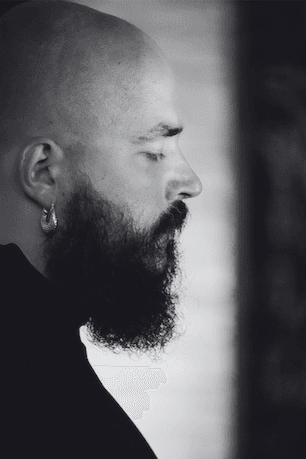
Maxim Shalygin
Maxim Shalygin is a Ukrainian-Dutch composer. He has written numerous chamber, vocal, and symphonic works, as well as music for theater, ballet, and film…
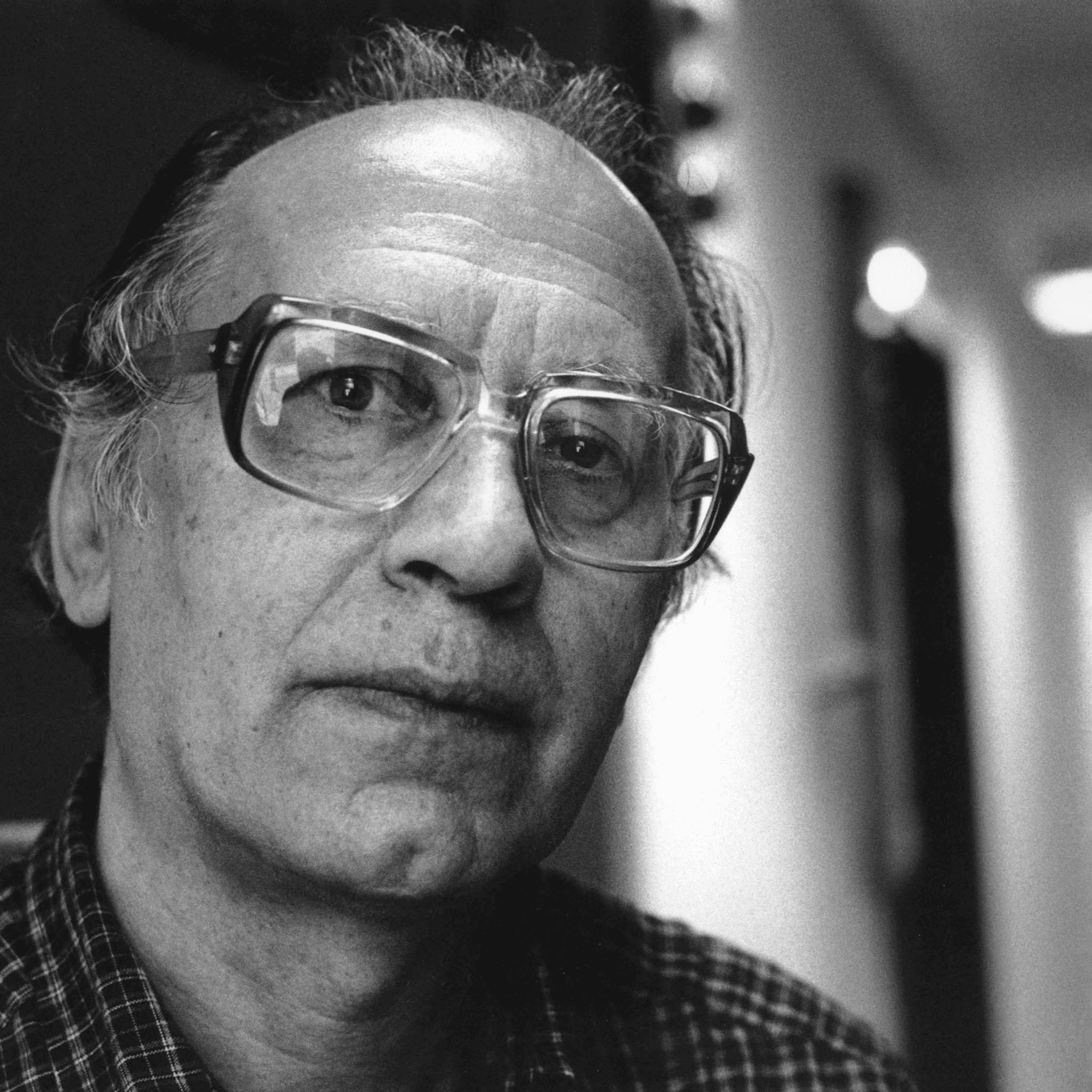
Valentyn Silvestrov
is considered one of the ideological patriarchs of the avant-garde, alongside Alfred Schnittke, Edisson Denisov, and Sofia Gubaidulina. Before being admitted to the Kyiv Conservatory…
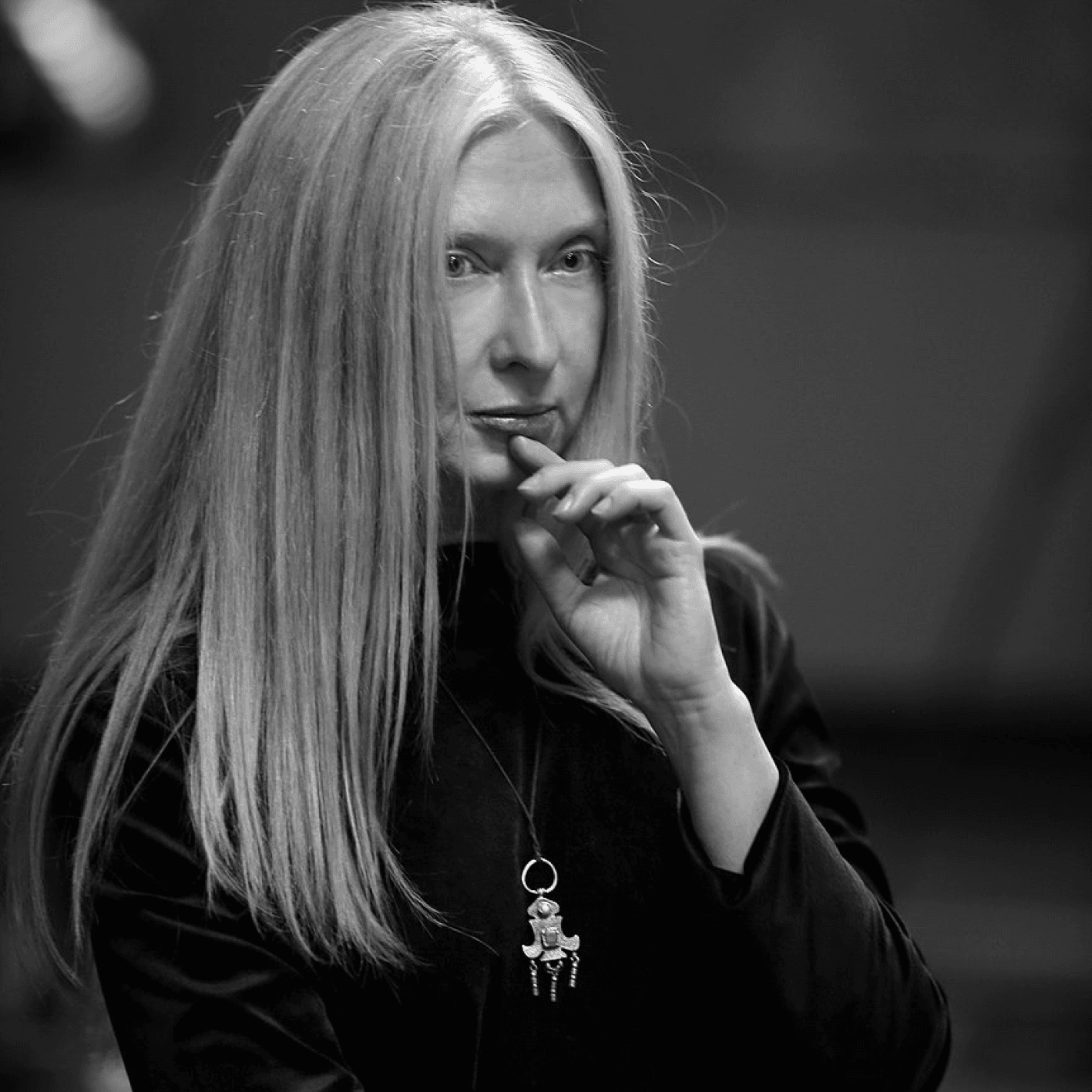
Victoria 'Vita' Polevá
In the late 1990s, Victoria Polevá abandoned her successful career as an avant-garde composer of polyphonic music. She began to question and ultimately transform her aesthetic ideals…
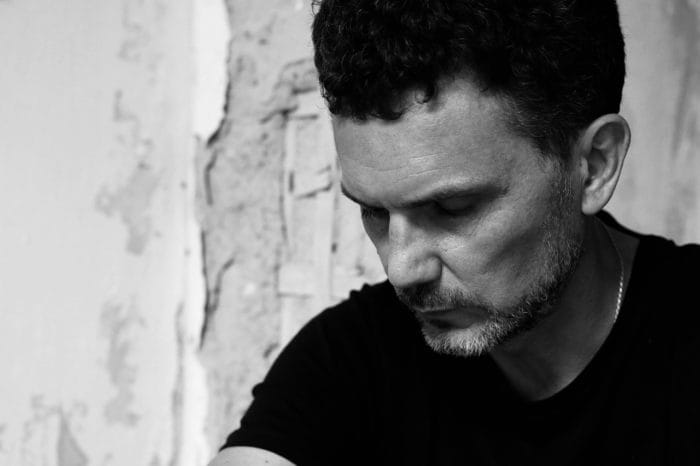
Svyatoslav Lunyov
Svyatoslav Lunyov was born on April 19, 1964, in Kyiv, Ukraine. He began his musical education at the age of seventeen, discovering the world of classical music. In 1986, he earned his first degree in engineering…
Maxim Shalygin
Maxim Shalygin is a Ukrainian-Dutch composer. He has written numerous chamber, vocal, and symphonic works, as well as music for theater, ballet, and film. Maxim has participated in many national and international competitions and is a winner of the 2012 Gaudeamus Award (Netherlands) and of the Gesamt project by Lars von Trier. His music has been performed at numerous prestigious venues and festivals worldwide, including: Muziekgebouw aan ’t IJ, Concertgebouw, TivoliVredenburg, Zuiderstrandtheater, Gaudeamus Muziekweek, Cello Biënnale Amsterdam, November Music, Soundsofmusic, Wonderfeel, Dag in de Branding [NL], hcmf// [UK], New Music Edmonton [CA], GAIDA Festival [LT], Gogolfest [UA], Musical Contrasts of the 20th Century [RU], and CIME/ICEM [US].
His works have been performed by leading contemporary music ensembles, including: Asko|Schönberg, Amsterdam Sinfonietta, DoelenKwartet, Insomnio, Nieuw Ensemble, Slagwerk Den Haag, and Keuris Quartet. Shalygin was Composer-in-Residence at Izolyatsia [UA], the Storioni Festival [NL], and is currently Composer-in-Residence at the Tomoko Mukaiyama Foundation [NL].
He studied in 2004 at the Rimsky-Korsakov Conservatory (St. Petersburg, Russia), completed a master’s degree in 2010 at the Tchaikovsky National Music Academy (Kyiv, Ukraine), and earned a second master’s degree in 2011 from the Royal Conservatory of The Hague (Netherlands).
Valentyn Silvestrov
is considered one of the ideological patriarchs of the avant-garde, alongside Alfred Schnittke, Edisson Denisov, and Sofia Gubaidulina. Before being admitted to the Kyiv Conservatory, the future composer studied at the Kyiv Polytechnic Institute.
During the 1960s, Silvestrov began gaining international recognition. In 1967, he was awarded the American Koussevitzky International Prize. Before him, only two Soviet composers – Sergei Prokofiev and Dmitri Shostakovich – had received this honor. In 1970, Silvestrov was expelled from the Ukrainian Composers’ Union for “politically incorrect statements” – at a time when he was already a well-known composer.
Today, Silvestrov’s music is heard at international festivals, and his works are performed by renowned musicians such as Gidon Kremer, Alexei Lubimov, Alexander Rudin, and many others. His compositions have been published by major Western music publishers.
Silvestrov is the author of seven symphonies, numerous orchestral works, and a large number of chamber music pieces.
Victoria 'Vita' Polevá
In the late 1990s, Victoria Polevá abandoned her successful career as an avant-garde composer of polyphonic music. She began to question and ultimately transform her aesthetic ideals—and in that process, her spirituality—pursuing what she described as the “absoluteness of renunciation, the purity of the experiment.”
By intertwining sacred and secular texts and musical traditions from various eras, Polevá has distinguished herself as one of the most original composers in Ukraine and Eastern Europe. Her works are frequently performed by leading ensembles and soloists around the world. In 2005, violinist Gidon Kremer included Polevá’s “Warm Wind” in his concert cycle Sempre Primavera.
In her first English-language interview, she spoke about her bold evolution as a composer, the origins of her passion, her collaboration with Kremer, and grief as a creative act (Music & Literature, Taylor Davis-Van Atta).
Polevá’s compositions include symphonic music, choral works, and chamber music. Her early works reflect an avant-garde aesthetic with polystylistic contrasts. Notable early pieces include the ballet “Gagaku”, “Transform” for symphony orchestra, and “Epiphany” for chamber ensemble. Since the late 1990s, her music has been increasingly associated with sacred minimalism. A key aspect of her work is her deep engagement with liturgical texts and their musical settings.
Svyatoslav Lunyov
Svyatoslav Lunyov was born on April 19, 1964, in Kyiv, Ukraine. He began his musical education at the age of seventeen, discovering the world of classical music. In 1986, he earned his first degree in engineering. In 1988, at the age of twenty-four, he began studying composition, marking the start of his artistic journey.
Throughout his career, Lunyov has composed across all genres of classical music: chamber music, choral works, vocal and piano music, electronic, electroacoustic, as well as theater and film music. In recent years, he has focused primarily on electronic, symphonic, and instrumental music. As a composer and sound artist, he is interested in exploring new sonic possibilities and creating musical forms where motion and stillness are uniquely interwoven.
His works have been performed by numerous ensembles, including: National Symphony Orchestra (Ukraine) Camerata Kyiv Chamber Orchestra (Ukraine) Kyiv Municipal Choir (Ukraine) Choir of the National University of Culture (Ukraine) MusikFabrik (Germany) Silk Road Duo (Germany) GamEnsemble (Russia) Ricochet Contemporary Music Ensemble (Ukraine) Alter Ratio Vocal Ensemble (Ukraine)