Broken Music of the English Renaissance
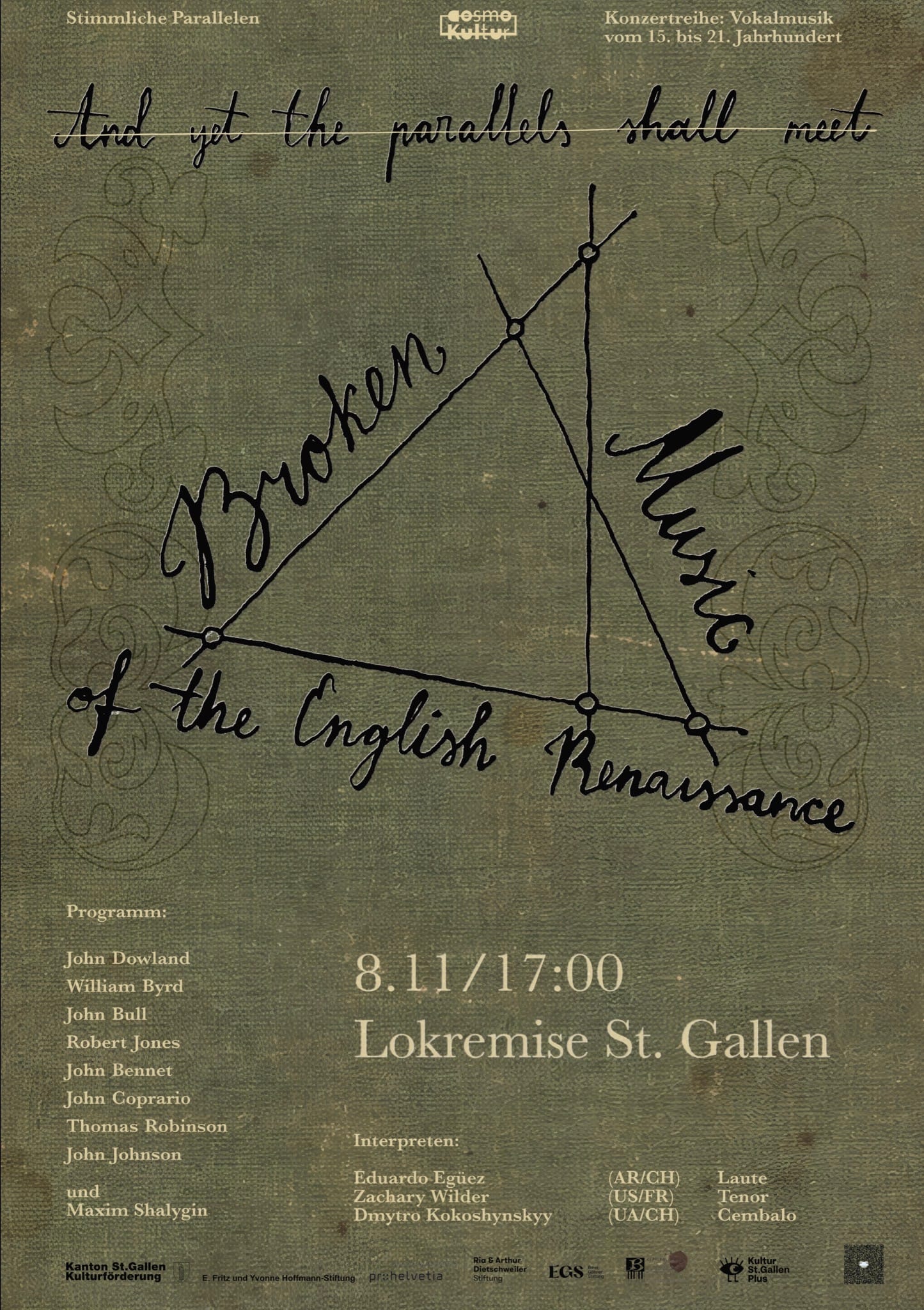
The second concert of the series “Stimmliche Parallelen” is devoted to English vocal music of the late 16th and early 17th centuries: Dowland, Byrd, Bull, Coprario, Jones, and others.
The central innovation of the program is an approach rarely practiced today: the songs of this era are performed not with lute but with harpsichord accompaniment. Recordings of this vocal music combining voice and harpsichord do not exist; in the English tradition, such a pairing appears only much later, at the time of Purcell. Drawing on sparse and partly contradictory historical evidence, harpsichordist Dmytro Kokoshynskyy reconstructs a plausible practice of harpsichord accompaniment for this repertoire.
Thus, two lines of vocal accompaniment meet on stage – lute and harpsichord. Eduardo Egüez and Dmytro Kokoshynskyy become both partners and rivals within the same vocal space.
The program also includes “Khora” by the Dutch-Ukrainian composer Maxim Shalygin – a new work for solo harpsichord, composed in late 2025 at the commission of Dmytro Kokoshynskyy.
Program
I. “Welcome my present pain”
John Bull
In Nomine XII
Anonymous
O death rock me asleep
John Coprario
So Parted You
Robert Jones
Though your Strangeness
John Dowland
Were Every Thought an eye
II. “The melancholy heart”
Thomas Robinson
A Fancy
John Dowland
O Sweet Woods
John Coprario
O Grief
John Dowland
Fantasia
Go Crystal Tears
Maxim Shalygin (geb. 1985)
KHORA (2025)
III. “While I live I needs must love”
John Johnson
The New Hunt Up
John Bennet
Venus Birds
William Byrd
If women could be fair
John Dowland
Lord Willoughbies his Galliard
Robert Jones
And is it night?
John Johnson
La Vecchia Galliard
John Dowland
Now, O Now
Musicians
Zachary Wilder (US/FR) – tenor
Eduardo Egüez (AR/CH) – lute
Dmytro Kokoshynskyy (CH/UA) – harpsichord
Dmytro Kokoshynskyy
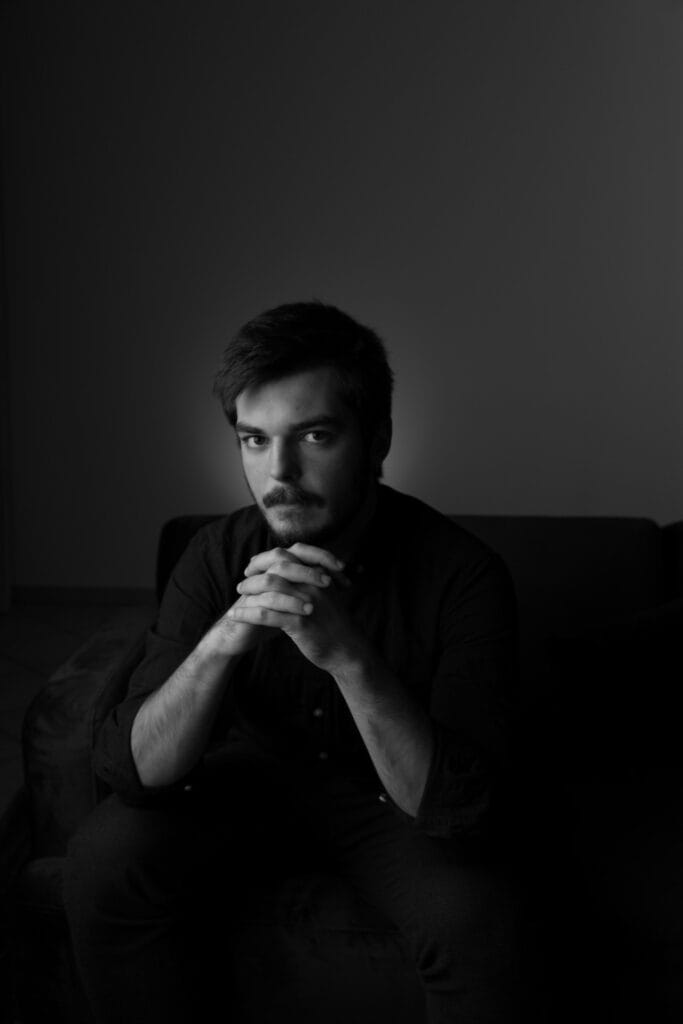
Dmytro Kokoshynskyy is a Ukrainian harpsichordist and prizewinner at several major international competitions, including 2nd Prize and the Audience Prize at the MA Competition in Bruges (2023), 3rd Prize at the International Bach Competition in Leipzig (2022), and 2nd Prize at the International Harpsichord Competition in Milan (2021).
Born into a musical family in Kyiv, he began his musical education at the R. Glière Music Institute, studying harpsichord with Olena Zhukova and piano with Juliana Yablonska. From 2017 to 2024 he continued his harpsichord studies at the Schola Cantorum Basiliensis in Basel with Francesco Corti, completing his postgraduate studies with Andrea Marcon in 2025.
As a soloist, Dmytro Kokoshynskyy performs in recitals and at festivals throughout Europe, including Milano Arte Musica, CIS – Cembalomusik in der Stadt Basel, Vespri Musicali San Maurizio, and others. His repertoire spans works from the late Renaissance, the Baroque, the Classical era, and contemporary compositions.
In May 2026, his debut solo album Music for These Troubled Times will be released on the Fuga Libera label. The program of this CD is devoted to melancholy in English music of the late 16th and early 17th centuries, and, through a contemporary work by Maxim Shalygin, builds a bridge to the melancholy of the present.
Zachary Wilder
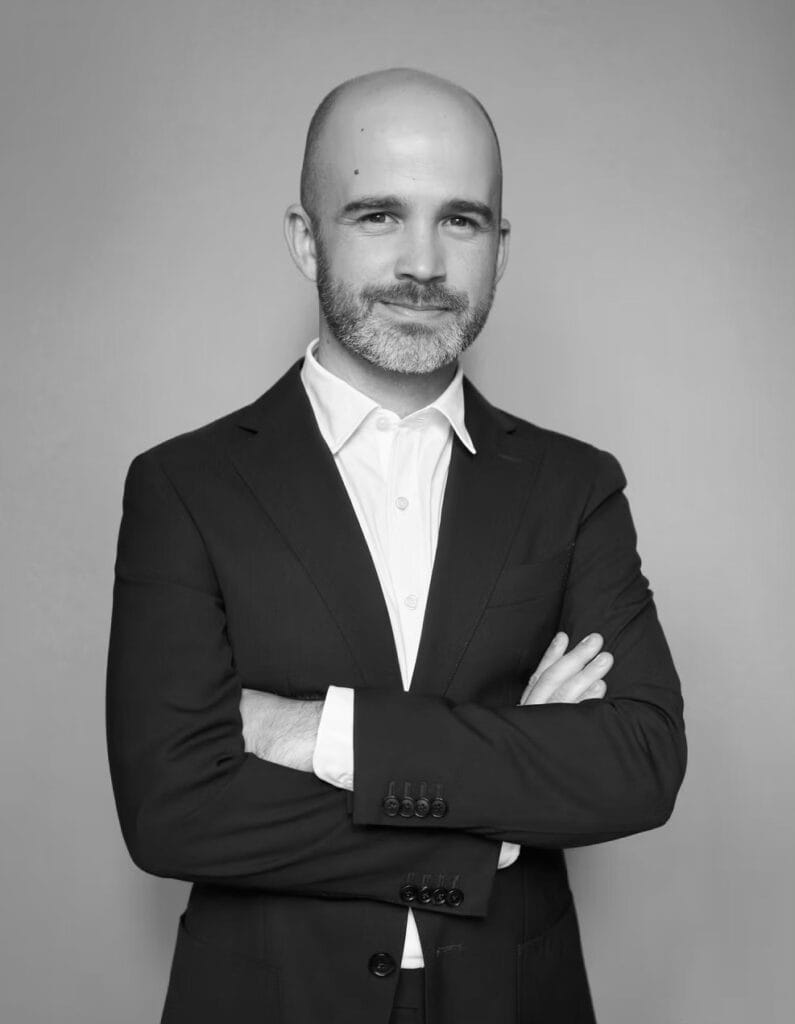
Beyond early music, Zachary Wilder has performed with leading symphony orchestras such as the Royal Philharmonic Orchestra, the San Francisco Symphony, and the Saint Louis Symphony. Highlights include Vaughan Williams’s On Wenlock Edge, Britten’s Nocturne, and the role of Mark in Frank Zappa’s 200 Motels.
Recent seasons have featured close artistic partnerships with prominent conductors: with Francesco Corti, he toured with Handel’s Radamisto and Il Pomo d’Oro, followed by stage productions at Drottningholm Palace Theatre (Purcell’s The Fairy Queen and Lully’s Armide) and a tour of Bach’s St Matthew Passion with the Freiburg Baroque Orchestra. Under Philippe Jaroussky, he sang Erinda in Sartorio’s L’Orfeo at the Opéra de Montpellier and made his debut in the title role of Mozart’s Mitridate with Capella Cracoviensis. He is also a frequent guest of Christina Pluhar and L’Arpeggiata, performing Monteverdi and Mozart, and has appeared with Raphaël Pichon and Pygmalion as Basilio in Mozart’s Le nozze di Figaro and in Monteverdi’s Vespro della Beata Vergine of 1610.
His discography comprises more than forty recordings on labels such as Ricercar, CPO, Soli Deo Gloria, Harmonia Mundi, Glossa, Atma, and Aparté, under conductors including William Christie, John Eliot Gardiner, Masaaki Suzuki, Christophe Rousset, and Raphaël Pichon.
Eduardo Egüez
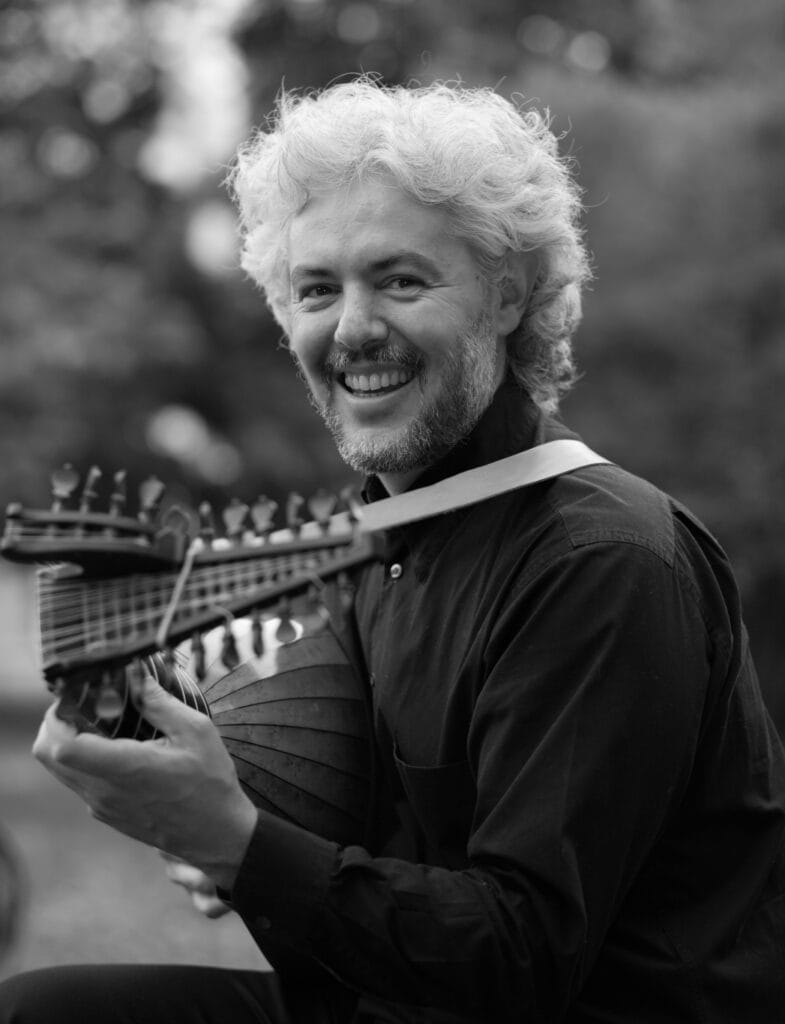
Eduardo Egüez, born in Buenos Aires, holds an outstanding position in the international lute scene. He has given numerous solo concerts and held masterclasses in major cities across South and North America, Europe, Australia, and Japan, earning critical acclaim and high esteem from audiences worldwide. As a soloist, he has recorded Tombeau (works by S. L. Weiss), the complete lute works of J. S. Bach, Le Maître du Roi (Robert de Visée), and L’Infidèle (S. L. Weiss).
He is a founding member and artistic director of Ensemble La Chimera, a formation that forges musical connections between early and modern music. Many of his arrangements and compositions have been performed and recorded in all of La Chimera’s projects, including Buenos Aires Madrigal, Tonos y Tonadas, La Voce di Orfeo, Odisea Negra, Misa de Indios, Ay Fortuna Cruel, and Gracias a la Vida. Eduardo Egüez has conducted La Púrpura de la Rosa (Torrejón y Velazco) at the Potsdam Festival, L’Orfeo (Monteverdi) in Santiago and Rancagua (Chile), and Gli Intermezzi della Pellegrina at the Innsbruck Festival of Early Music.
Eduardo Egüez teaches lute and basso continuo at the Zurich University of the Arts (Switzerland).