Quelque chose qui cloche
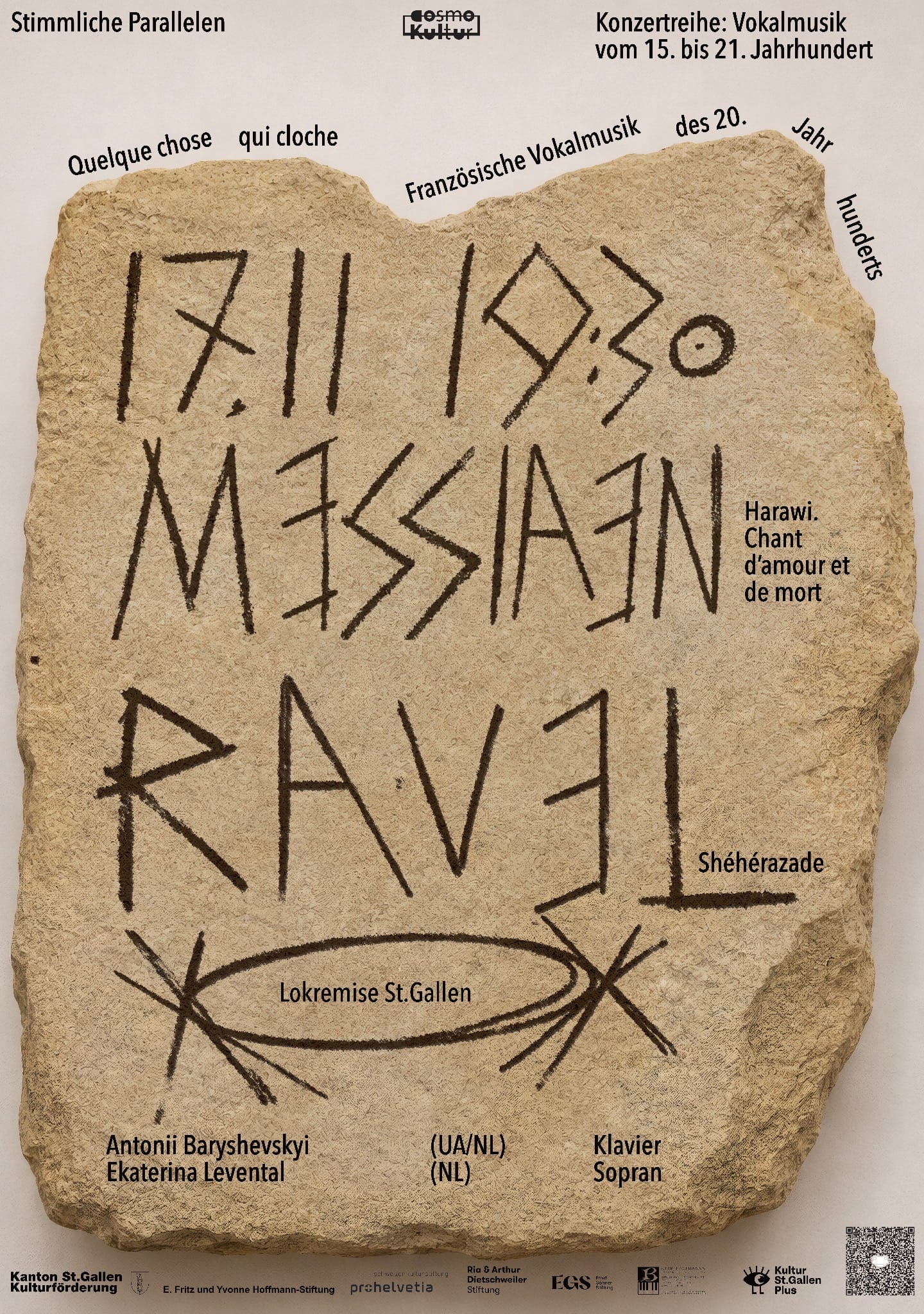
At the center of the second half stands Olivier Messiaen’s monumental cycle Harawi. Chant d’amour et de mort — the first part of his large-scale “Tristan Trilogy.” Drawing on Andean folklore and Peruvian myths, Messiaen reinterprets the timeless story of Tristan and Isolde, here renamed Piroutcha (from the French original Iseult). The cycle fuses the distant exoticism of South America with mystical transcendence and extreme emotional intensity. Messiaen himself described Harawi as a miniature theater and a “great cry of love” inseparably bound to the theme of death — fittingly, two of the cycle’s most beautiful chords are carved into the composer’s tombstone in Saint-Théoffrey.
A special place within the cycle belongs to the piece “Amour oiseau d’étoile,” written under the impression of the surrealist painting Seeing Is Believing (1937) by the British surrealist Sir Roland Penrose. Conceived as a nocturne, the painting shows an enormous, inverted woman’s head floating above a nighttime coastal town, its long hair brushing the streets and merging with the sea. This image of the muse — inspired by the artist’s lover, Lee Miller — became for Messiaen an embodiment of poetic illumination. The title itself points to the paradox of visual perception in Surrealism: what the rational mind seeks to reject (a giant head suspended in the sky, its hair turning into streets or waves) is affirmed by the painting as the absolute reality of dream and the unconscious. Messiaen saw in this work the quintessence of poetic illumination, where the visual image overpowers logic and dissolves into pure music of love and the cosmos — giving rise to one of the most affecting and concentrated pages of the entire cycle.
Program
Maurice Ravel
Shéhérazade
Cinq mélodies populaires grecques
Deux Mélodies hébraïques
Olivier Messiaen
Harawi. Chant d’amour et de mort
Cloches d’angoisse et larmes d’adieu
Tristan Murail — Cloches d’adieu, et un sourire
(In memoriam Olivier Messiaen)
Musicians
Antonii Baryshevskyi (NL/UA) – piano
Ekaterina Levental (NL) – soprano
Antonii Baryshevskyi
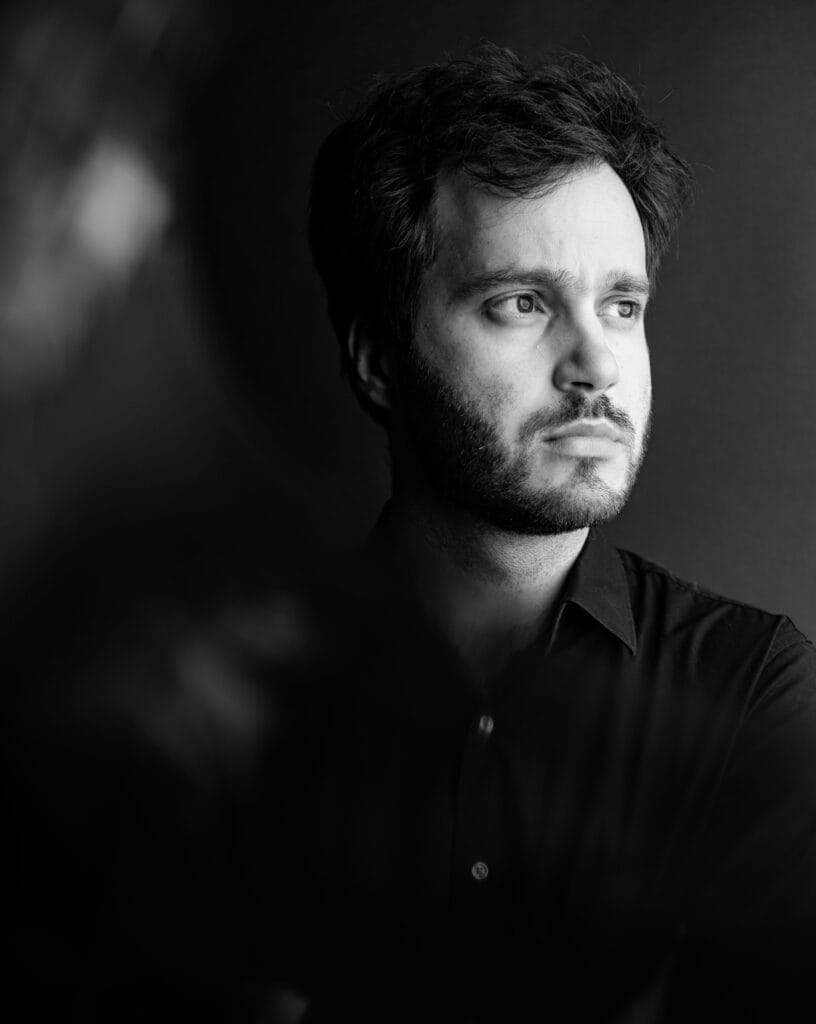
Antonii Baryshevskyi is a Ukrainian pianist and a winner of the First Prize in some of the most prestigious international piano competitions such as Arthur Rubinstein International Piano Master Competition, “Premio Jaen”, and F. Busoni International Piano Competition.
Mr. Baryshevskyi gives master classes in Ukraine and abroad, as a guest professor in Davidsbündler Music Academy in The Hague and a regular member of the Landesakademie in Ochsenhausen (Germany). Antonii Baryshevskyi graduated from the National Music Academy of Ukraine and École Normale de Musique de Paris where he studied with Profs. Valerii Kozlov and Marian Rybicki. He also trained under Alina Sorkina, Ryta Donskaya, Lily Dorfman. Antonii Baryshevskyi has been a guest of renowned festivals such as Progetto Martha Argerich, Klavier Ruhr festival, Busoni Festival, projects by Musica Insieme Fondazione, and others. Mr. Baryshevskyi performed at venues such as Wigmore Hall, Konzerthaus Berlin, Berliner Philharmonie, Kölner Philharmonie, The Royal Concertgebouw, Warsaw Philharmonic and Teatro Comunale di Bologna. He performed in almost all European countries, Israel, Japan, South Korea, and the USA.
Mr. Baryshevskyi played with some of the leading European orchestras, including Munich Radio Orchestra, The Israel Philharmonic Orchestra, Filarmonica Arturo Toscanini under the baton of maestros Asher Fisch, Frederic Chaslin, Howard Griffiths, Oksana Lyniv, Andrey Boreyko, Kirill Karabits, and many others.
Ekaterina Levental
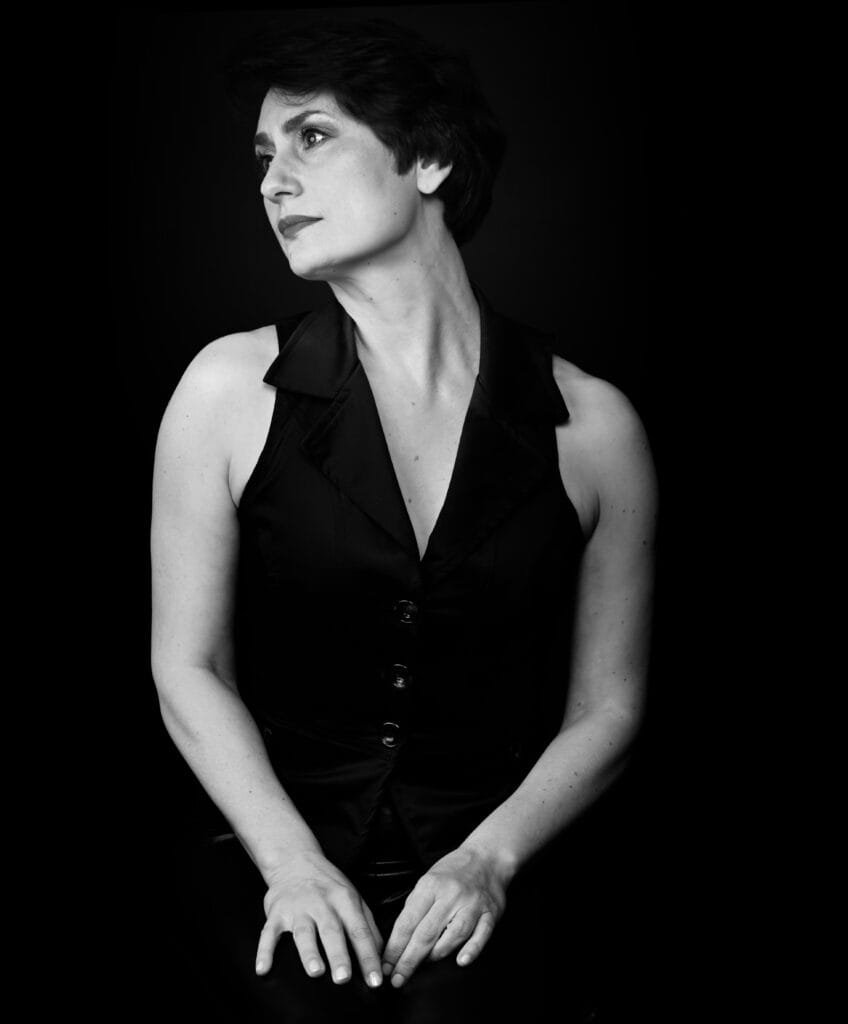
Look life straight in the eye and stand strong in the search for truth and strength. Ekaterina Levental shows us how to give this quest a tangible shape. As a refugee, she travelled with her parents from Uzbekistan, via Israel, to the Netherlands. Shaped by a youth marked by displacement, she understands the deep search for identity and self-worth. At the same time, her world is vibrant and full of nuance. With her voice, harp, and body as instruments, she offers us her perspective, sharp and gentle at once. It is a call to pause and reflect on our own motivations and beliefs.
Ekaterina moves with ease between opera, chamber music, and music theatre, drawing from a repertoire that spans from the baroque to the contemporary. Her solo recitals also have a strong narrative structure, with Ekaterina accompanying herself on the harp. She opens up the worlds of Liszt, Rossini, and Rachmaninoff, as well as those of socially engaged composers like Shostakovich, Schönberg, and Weill. She surprises with ventures into international folk music, French chansons, and Barbra Streisand. Her sensitivity to the spirit of a work ensures that language is never a barrier to the listening experience – she touches us in the moment.
Pianist Frank Peters and Ekaterina were the first to record the complete songs of Russian composer Nikolai Medtner (1880–1951). According to his best friend Rachmaninoff, Medtner was the greatest composer of his time. Incantation, the first of the five CDs, received the international Pure Sound Award. Sacred Place, the final release, came out in December 2024. The review in Fanfare Magazine (USA) reflects the wide acclaim from both national and international press: ‘The purity of Levental’s voice is once again coupled with remarkable attention to Medtner’s often unexpected rhythmic play and his unusual harmonies, as well as with illumination of the details of the texts.’